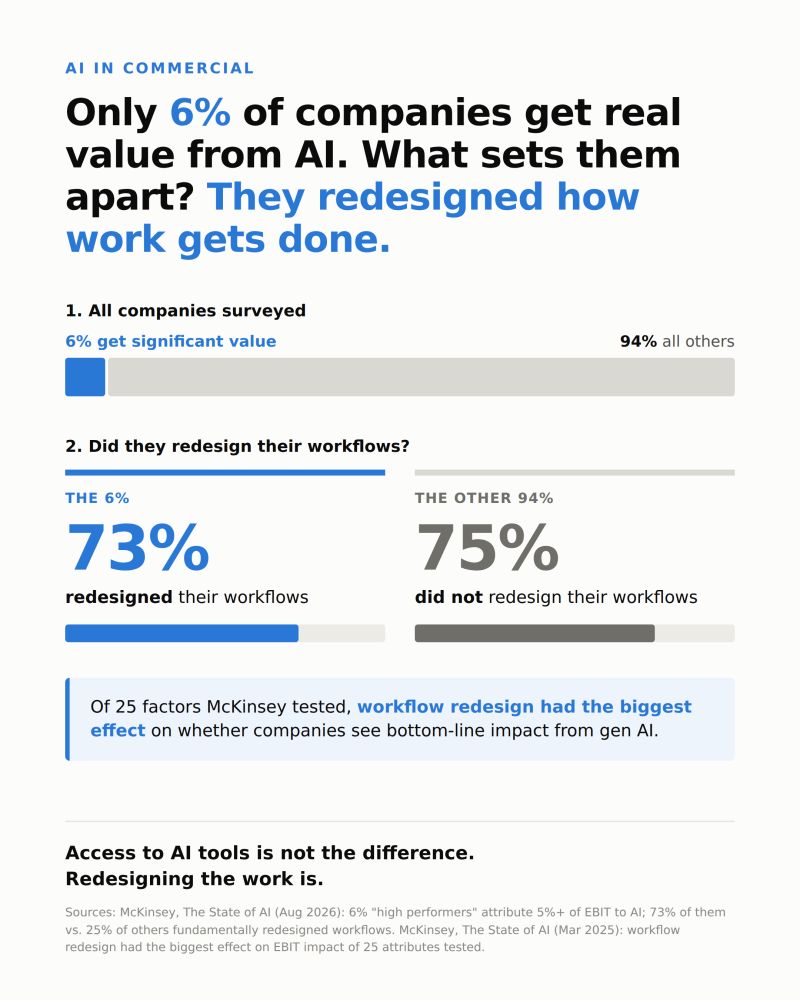
Only 6% of companies get significant value from AI, according to McKinsey’s latest State of AI research. Almost three in four of them have one thing in common, and it isn’t better technology.
73% of these companies have fundamentally redesigned their workflows. Among the other 94%, three in four have not. And of 25 factors McKinsey tested, workflow redesign had the biggest effect on bottom-line impact.
That matches what I’ve seen. Most peers I talk to in other pharma companies now have access to AI. Far fewer have changed how the work actually gets done: who does what, how decisions get made, what gets measured. The value doesn’t come from the tool. It comes from changing the work around it.
A few things I’ve seen make a difference:
- Look at the whole chain, not a single task. In content, for example, a marketer creating a first draft in 30 seconds doesn’t help much if MLR (medical, legal, regulatory) review still takes weeks.
- Involve compliance from day one. In our industry, good governance is what allows you to scale beyond a pilot.
- Support frontline managers. They often decide whether a new way of working survives its first few months.
What has been the biggest barrier to redesigning work around AI in your organisation: technology, process or people?
Originally posted on LinkedIn. Sources: McKinsey, The State of AI; McKinsey, The State of AI: How organizations are rewiring to capture value.


Leave a comment